

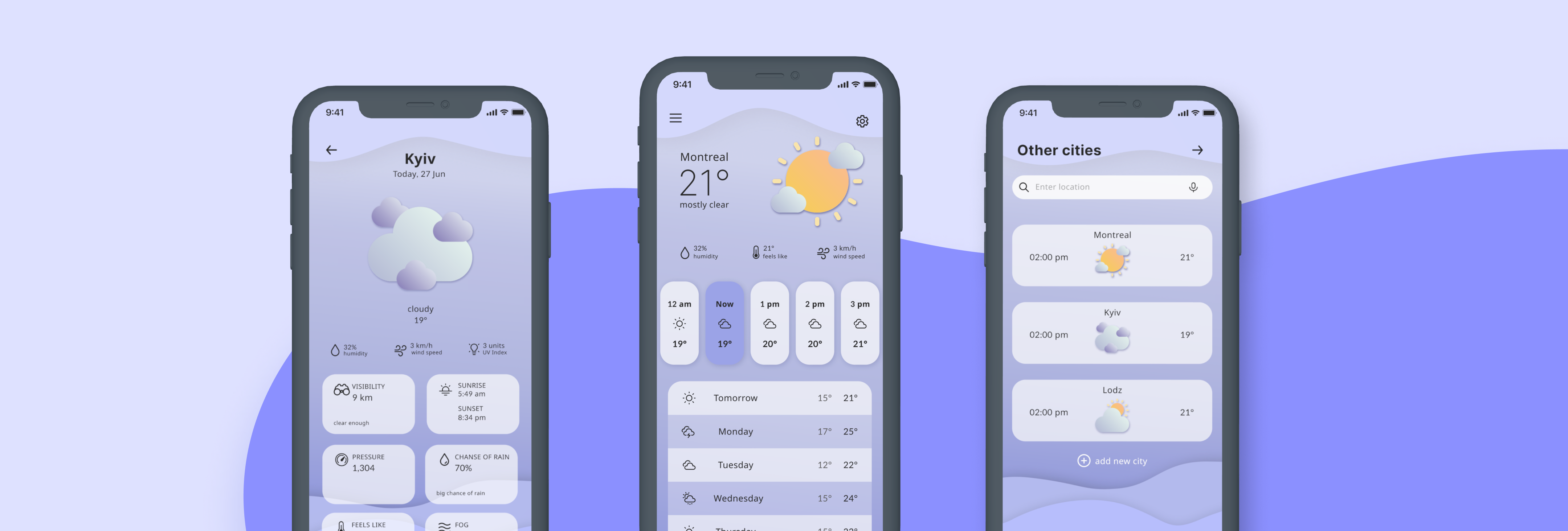
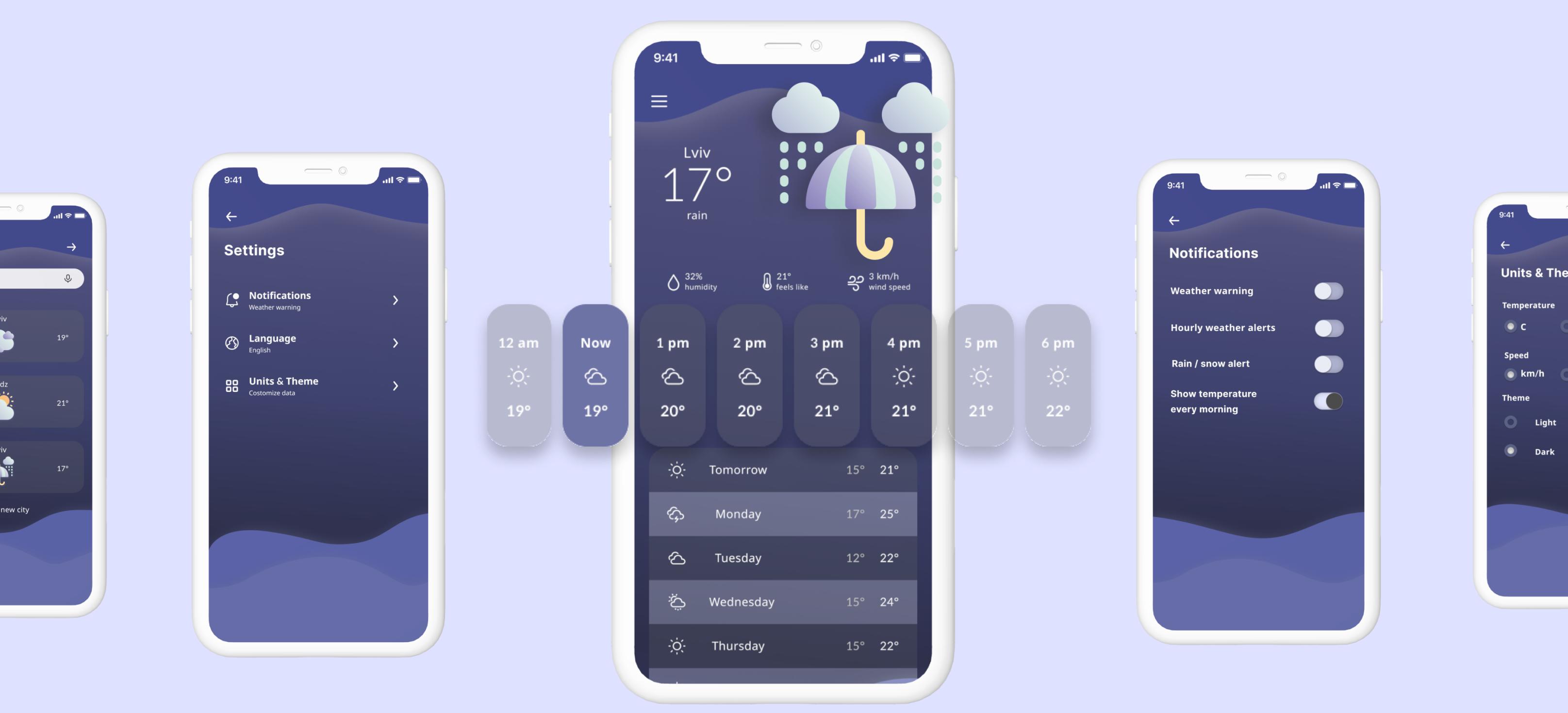
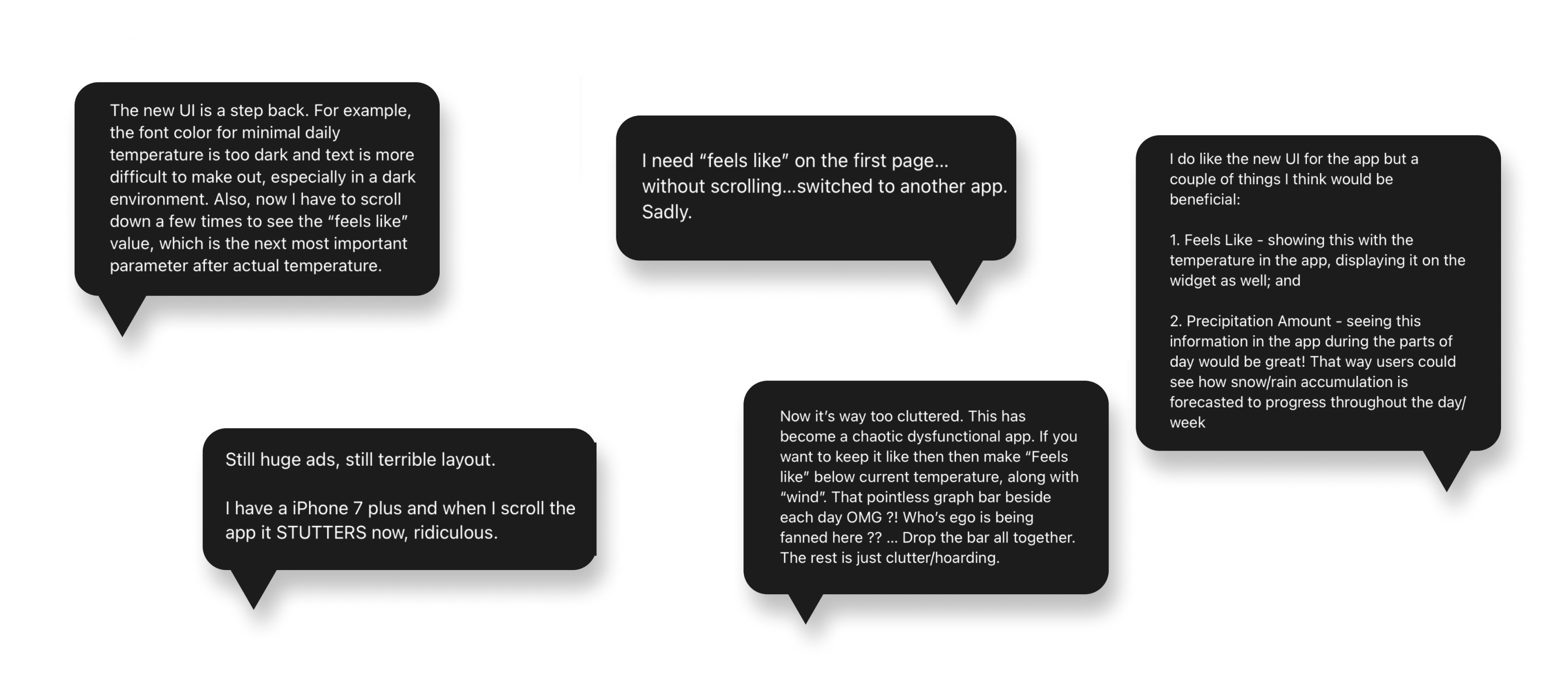
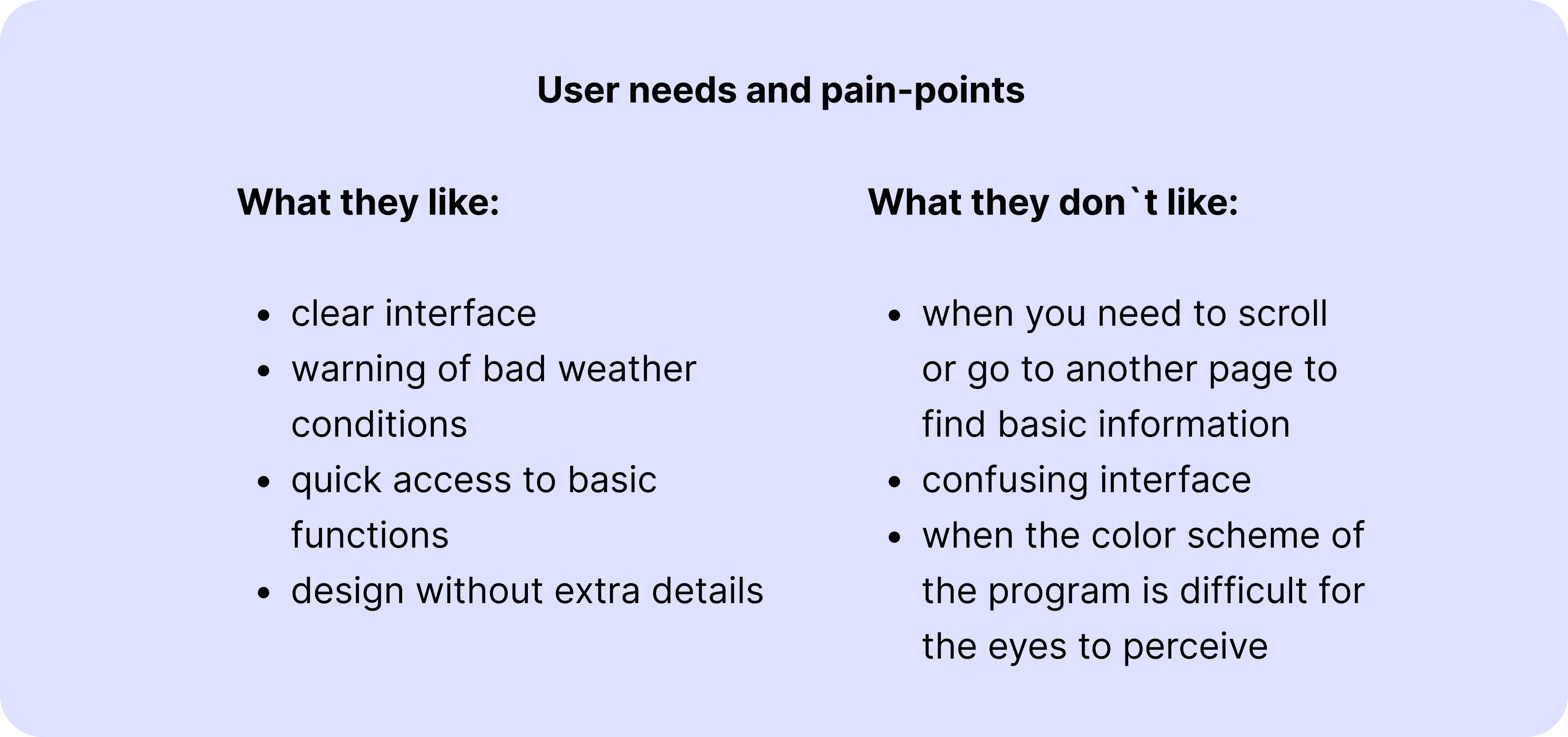
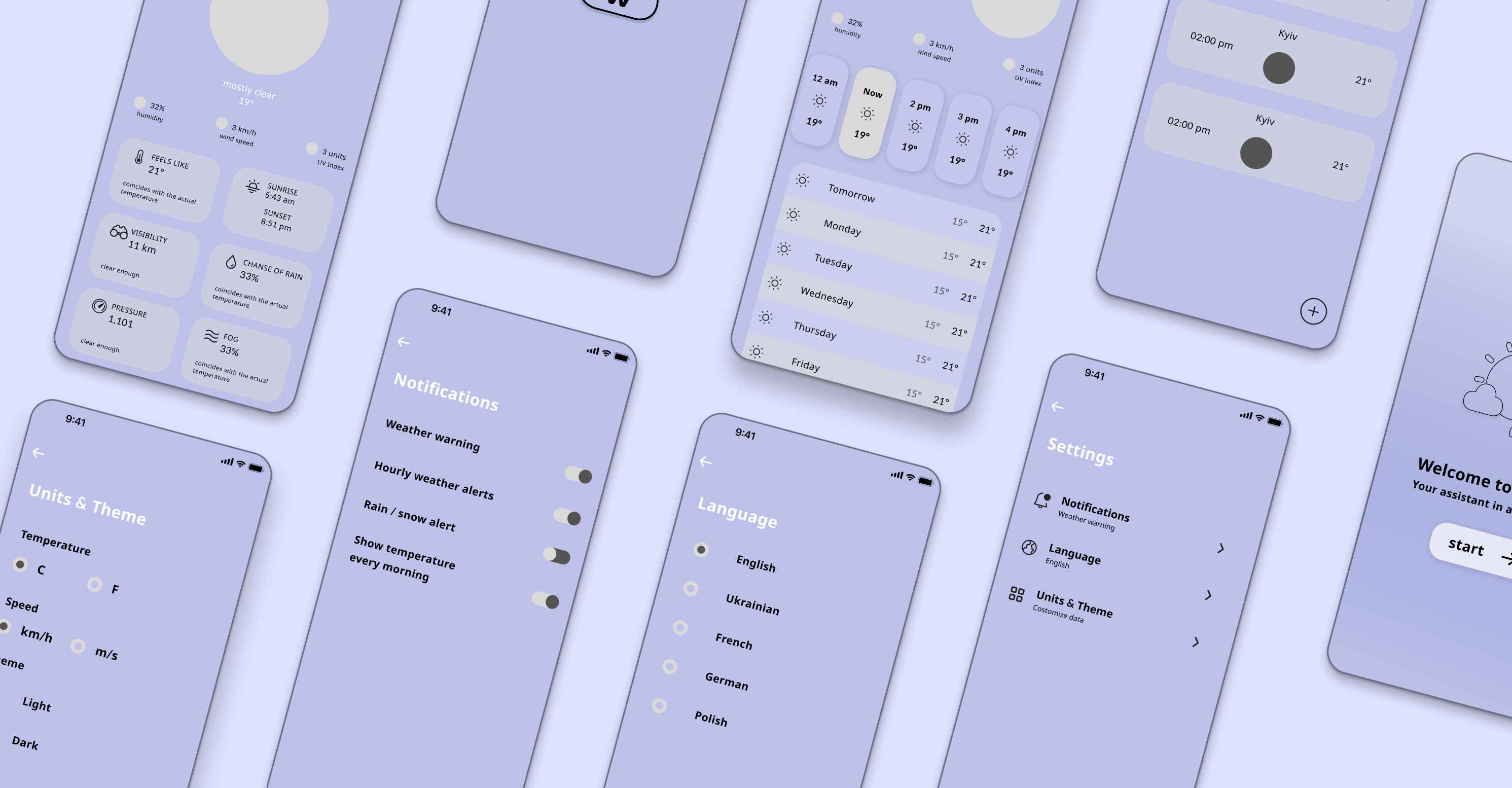
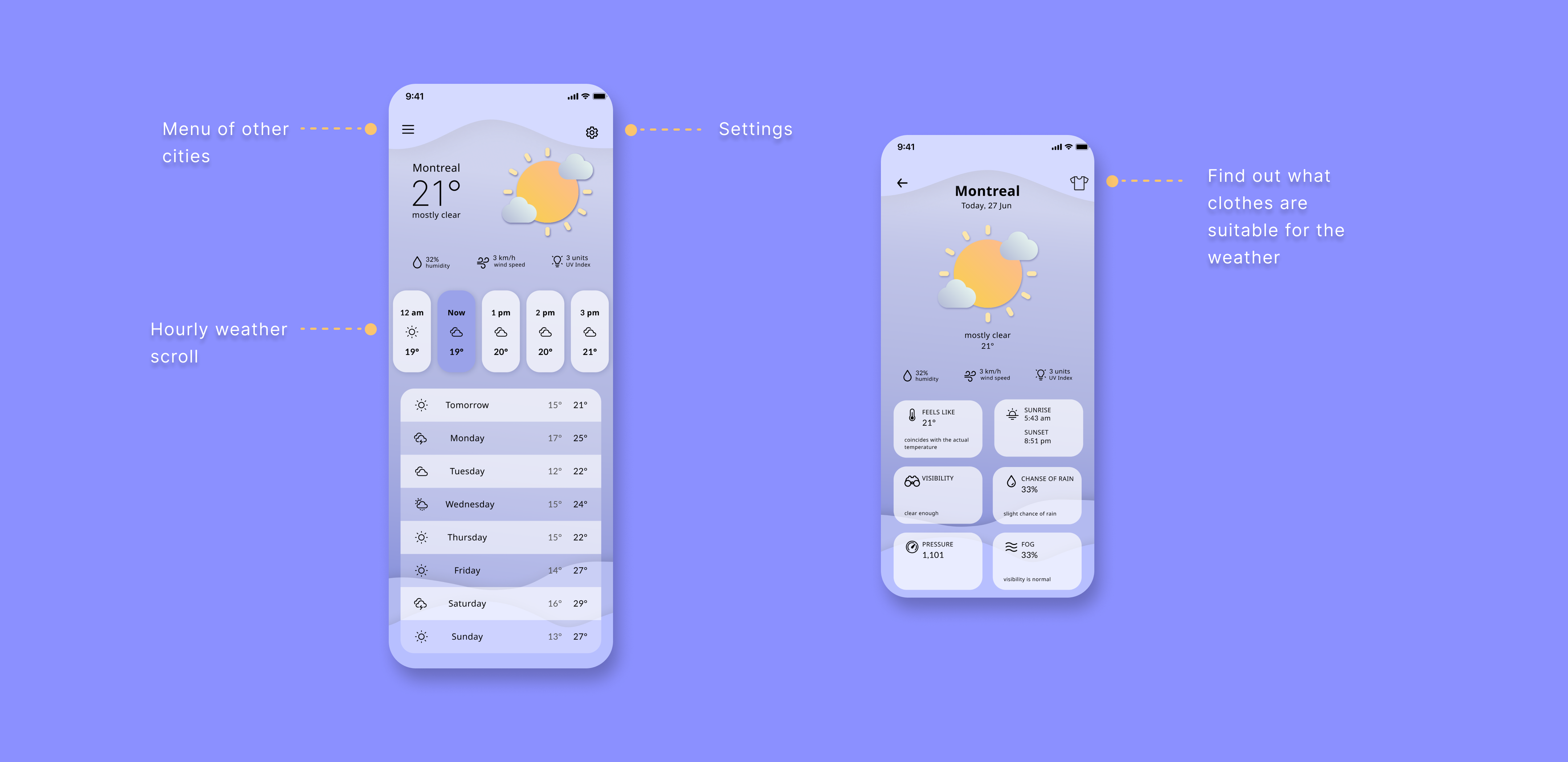
In the final design, I made the decision to use purple colors as they effectively convey the app's concept. The color scheme was chosen to ensure the app is both visually appealing and easy to navigate. Based on user feedback from interviews, I added all of the most popular functions and information to the main screen, which users found to be the most relevant. By clicking on the icon that displays the current weather conditions, users can quickly access more detailed information about the weather, such as temperature, humidity, wind speed, and precipitation. The app's interface was designed to be user-friendly, with easy-to-navigate menus and buttons. The layout was optimized to ensure that the most important information is prominently displayed and easily accessible.
Click here to try the final prototype.
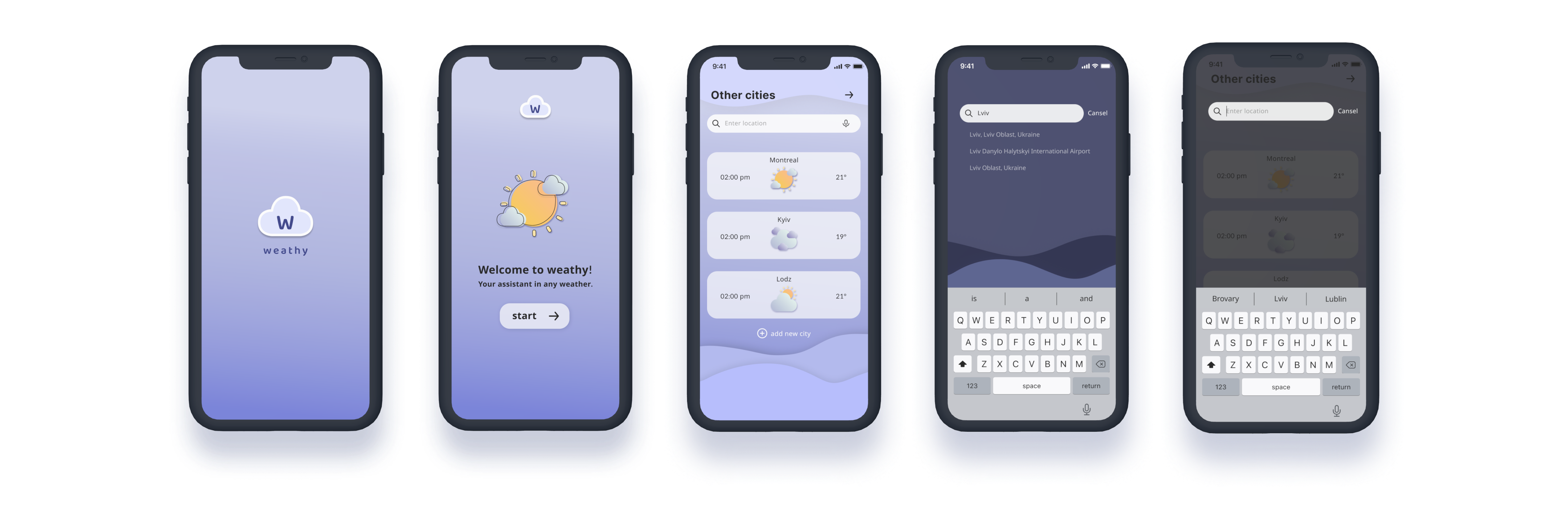
In addition to displaying the weather in the user's current location, the final design of the weather app also allows users to conveniently view weather information for different cities. This feature lets users easily plan their day, whether at home or traveling. To make the search process more efficient, the app includes hints that help users quickly find the city they are looking for. As users type in the search bar, the app provides suggestions for cities that match the search term, which saves time and makes the app more user-friendly. Furthermore, the app allows users to save cities for quick reference, which is especially useful for those who travel frequently or have family and friends in different locations. Users can save their favorite cities to a list, making it easy to switch between locations and check the weather in each city.
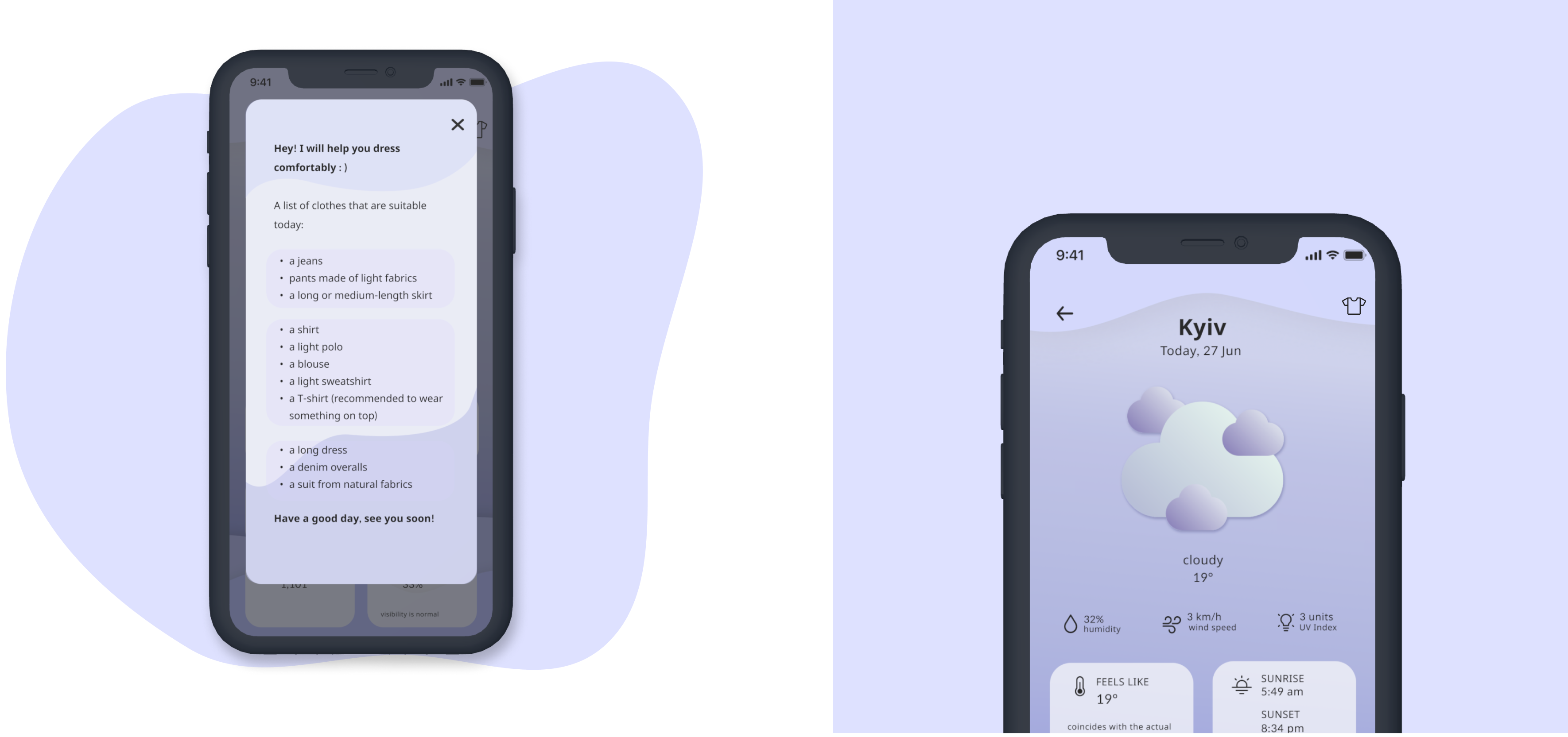
The program's key feature is its ability to generate a list of clothes that are comfortable for a given weather condition. This feature has been designed to be gender-neutral and suitable for all users. To ensure the program generates a comprehensive and personalized list of clothes, the user will be prompted to enter specific details such as their gender, age, and personal preferences. For instance, users can indicate whether they prefer to wear dresses, pants, or shorts in warm weather, or whether they prefer layers or heavy coats in cold weather. The program will then generate a tailored list of comfortable clothing options based on the user's input. The list may include clothing items such as t-shirts, shorts, skirts, jeans, and jackets, among others. To ensure inclusivity, the program will avoid using gender-specific terms like "men's" or "women's" clothing, and instead use general terms that are inclusive to all users.
If you like what you see and want to work together, get in touch!
22viktoria2001@gmail.com